Screen · 2026-08-19 · 2:38The Rock That Broke Open MarsA rover wheel fractured an ordinary stone in Gediz Vallis. Inside: yellow crystals no mission had confirmed on Mars — native elemental sulfur.2:380:00Gediz Vallis0:18The channel0:36A stone under the wheel0:52Native sulfur1:14A field, not a fragment1:34The crystals2:14What it leaves behindTranscript0:00When a rover wheel fractured an unremarkable stone in Gediz Vallis, it exposed yellow crystals unlike anything previously confirmed on Mars.0:10What began as an accident has become a new chapter in the planet’s geological history.0:18Gediz Vallis is a channel cutting through the northern slope of Mount Sharp in Gale Crater — carved late, after older lake sediments had already turned to rock.0:36On May 30, 2024, Curiosity drove across a field of pale stones. One of them shattered beneath a wheel.0:48Through the fracture, the cameras saw yellow crystalline material concealed beneath a weathered exterior.0:58Mars is rich in sulfur compounds. This was different. Not a sulfate. Native sulfur — sulfur in its elemental form.1:14The rock, nicknamed Convict Lake, was not an isolated curiosity. Surrounding it was an entire field of similarly bright stones.1:28The problem is no longer a loose fragment. It is a sulfur-forming environment inside an ancient Martian canyon.1:40On June 4, MAHLI photographed the interior. APXS found extraordinary sulfur without the companion elements of an ordinary sulfate salt.2:00Figure 1 — elemental sulfur crystals inside Convict Lake. NASA/JPL-Caltech/MSSS. PIA26307.2:14Confirmed: the first native sulfur deposit identified on Mars. Not established: life, a vent, or a hot spring at the rover’s location.2:28Mars often hides its most important records behind weathered surfaces. This time it took a wheel, a brittle stone, and the chance to see what had been sealed inside.Read the paper → The Rock That Broke Open MarsMore films4:23Watch hereThe Last Meters of DustStarship can cross millions of miles of vacuum. Return fuel cannot. Ice sits beyond 40°, the equator is where you want to land, and Arcadia is a thin overlap under meters of abrasive dust.2026-08-193:59Watch hereThe Lopsided PlanetCollision versus the internal cauldron. Strip the atmosphere, exaggerate the topography, and Mars is not a sphere — it is a scar. 6 km of crust at Isidis, 117 km under Tharsis, a 5 km step at the equator.2026-08-19 · 2.4k views7:27The megawatt bottleneckDeriving the Martian surface power budget. 3.4 MW for propellant. Solar dies in a storm. Fission is the gate.2026-08-09 · 3.5k views·Watch on X
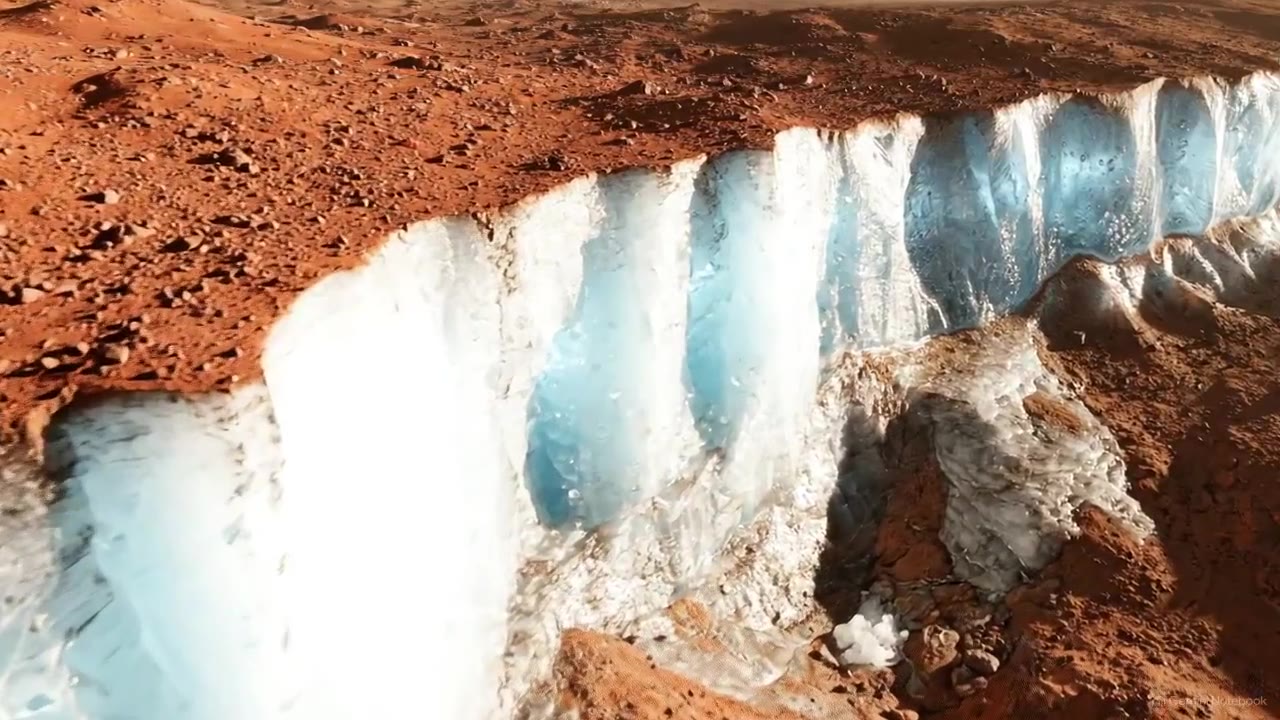 4:23Watch here
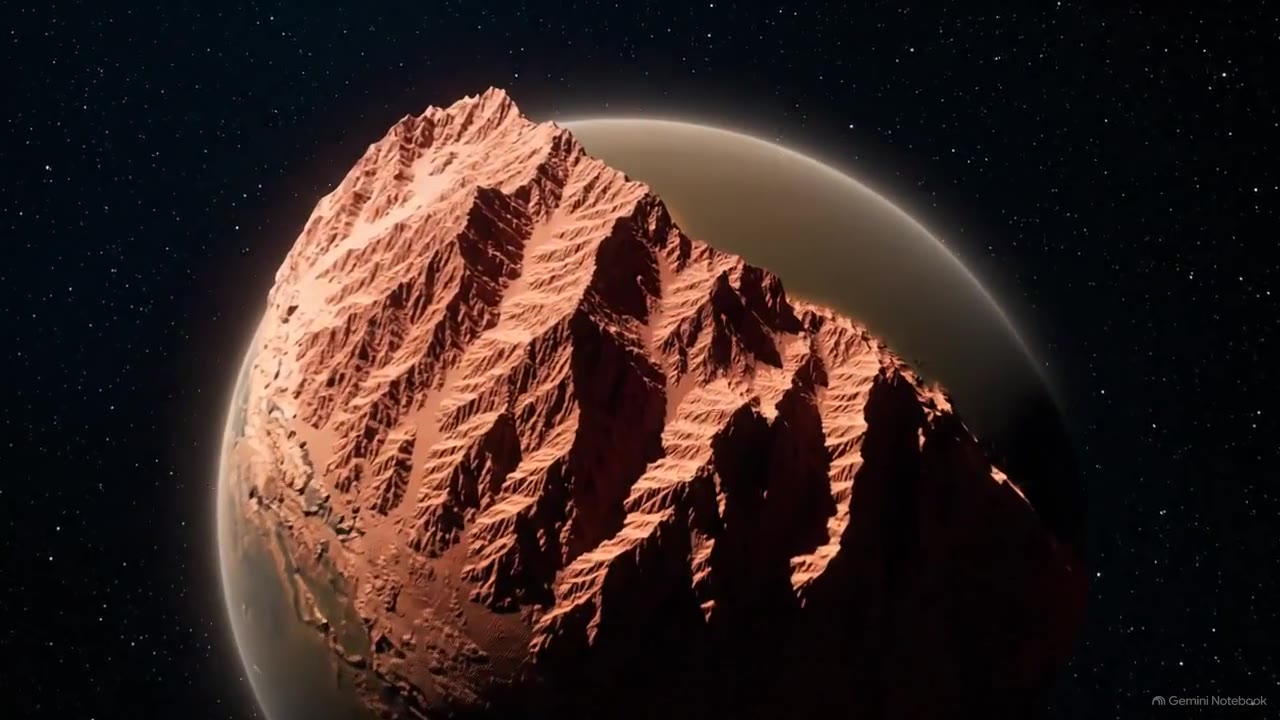 3:59Watch here
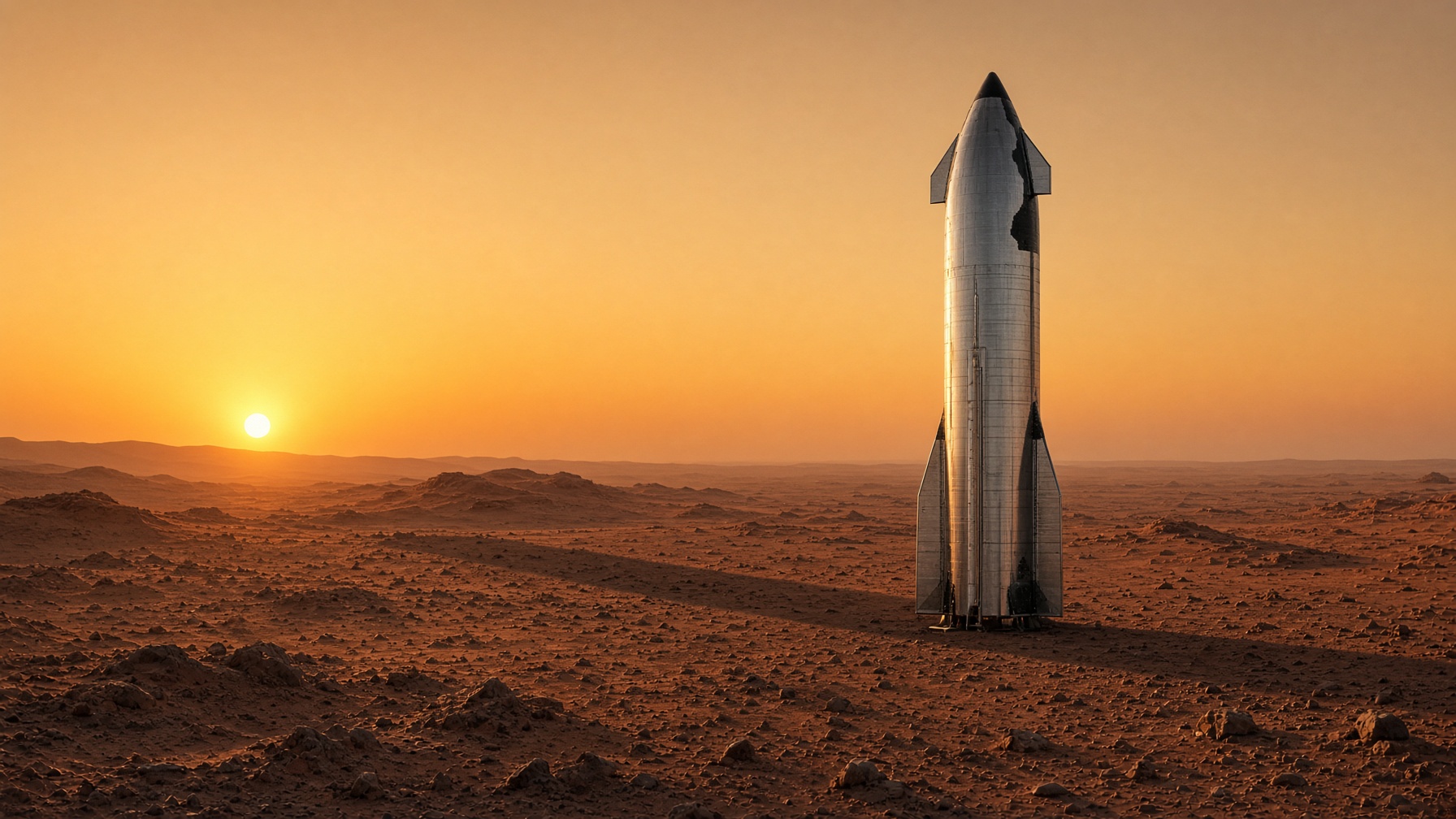 7:27
7:27