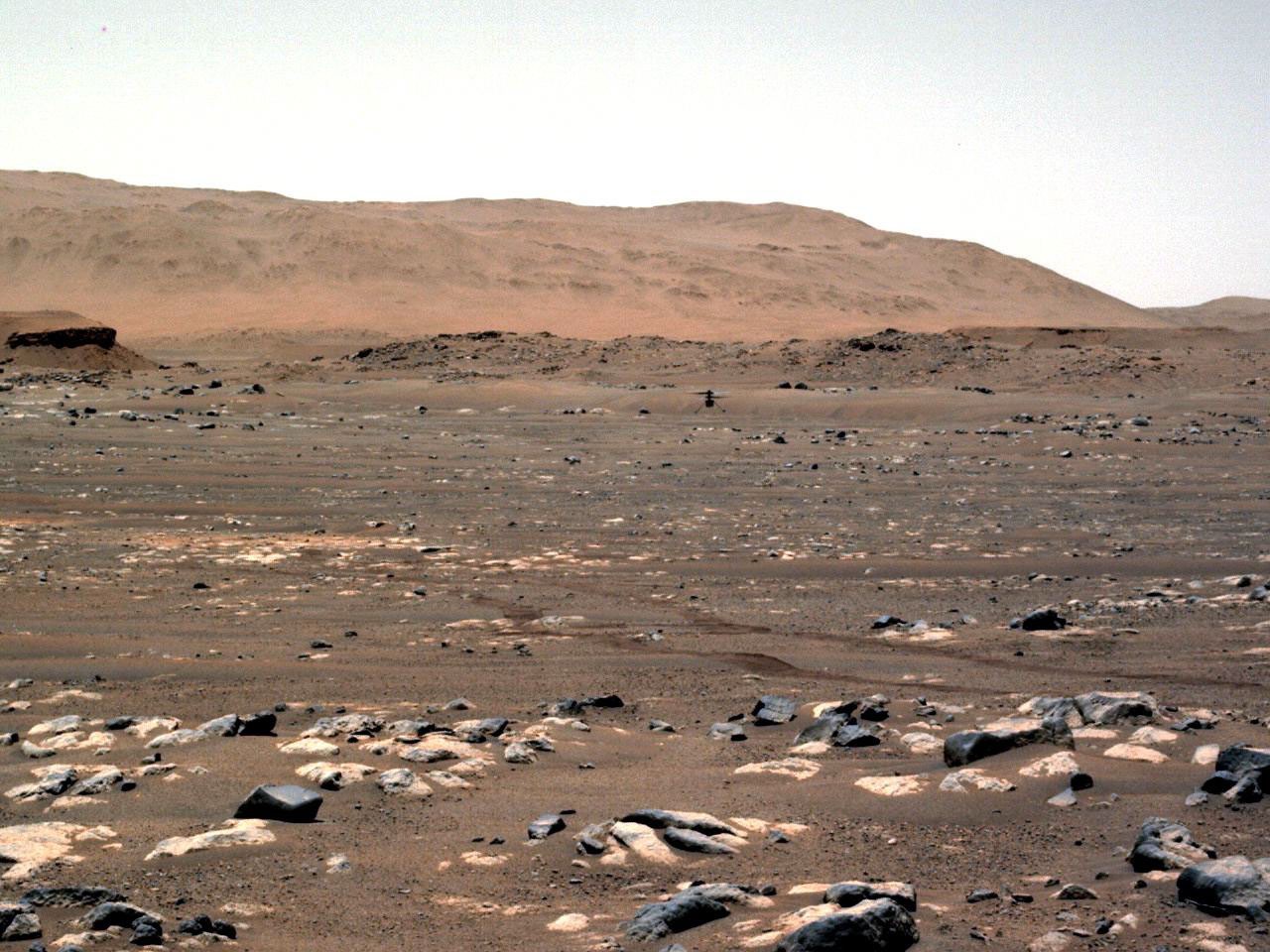
Perseverance · Ingenuity · Flight · 7 min read
The First Rotor
Seventy-two flights. First powered flight on another world. A scout is not a city.
Seventy-two flights. First powered flight on another world.
Seventy-two flights. First powered flight on another world. A scout is not a city. Perseverance lands in Jezero on 18 February 2021 with a four-pound rotorcraft strapped under the belly. On 19 April the rotors spin in air less than one percent as dense as Earth’s. NASA: the first powered, controlled flight on another planet. They call it a Wright Brothers moment. The airfield gets a name: Wright Brothers Field. ICAO designator IGY. Call-sign INGENUITY. Ceremonial location designation JZRO for Jezero Crater.
The plan was five flights in thirty days
The plan was five flights in thirty days. A technology demonstration. No science instruments in the tissue-box fuselage. Mass about 4 pounds — 1.8 kilograms. Height about 19.3 inches — 49 centimeters. Twin counter-rotating blades just under 4 feet — 1.2 meters — tip to tip. Solar panel on top charges lithium-ion batteries for about one ninety-second flight per Martian day. NASA printed the design ceiling as about 15 feet and the design range as about 980 feet. Those are the brochure lines. The flown numbers go past them.
First flight
First flight, 19 April 2021: climb, hover, land. NASA Administrator Bill Nelson: 117 years after the Wright brothers, Ingenuity succeeds in performing the first flight on another world. A swatch from the original Wright Flyer rides with the helicopter. That is a flown relic. It is not a passenger. It is not a city.
Then it keeps flying
Then it keeps flying. After the five-flight demo, NASA turns it into an operations demonstration — an aerial scout for Perseverance’s science and drive planners, and later an engineering platform to push aerodynamic limits. NASA Science closes the ledger: 72 flights. 128.8 minutes in the air. 10.5 miles — 17.0 kilometers — across Jezero. Peak altitude 78.7 feet — 24.0 meters. Designed for a month. It ran almost three years.
Flight 72
Flight 72, 18 January 2024: a short vertical hop to find itself after an emergency landing on the previous flight. Data: climb to 40 feet — 12 meters — hover 4.5 seconds, descend at 3.3 feet per second — 1 meter per second. About 3 feet — 1 meter — above the ground, contact with the rover drops. Contact returns the next day. Imagery later shows one or more rotor blades damaged on touchdown. NASA announces the end of the mission on 25 January 2024. The helicopter remains upright and in communication. It cannot fly.
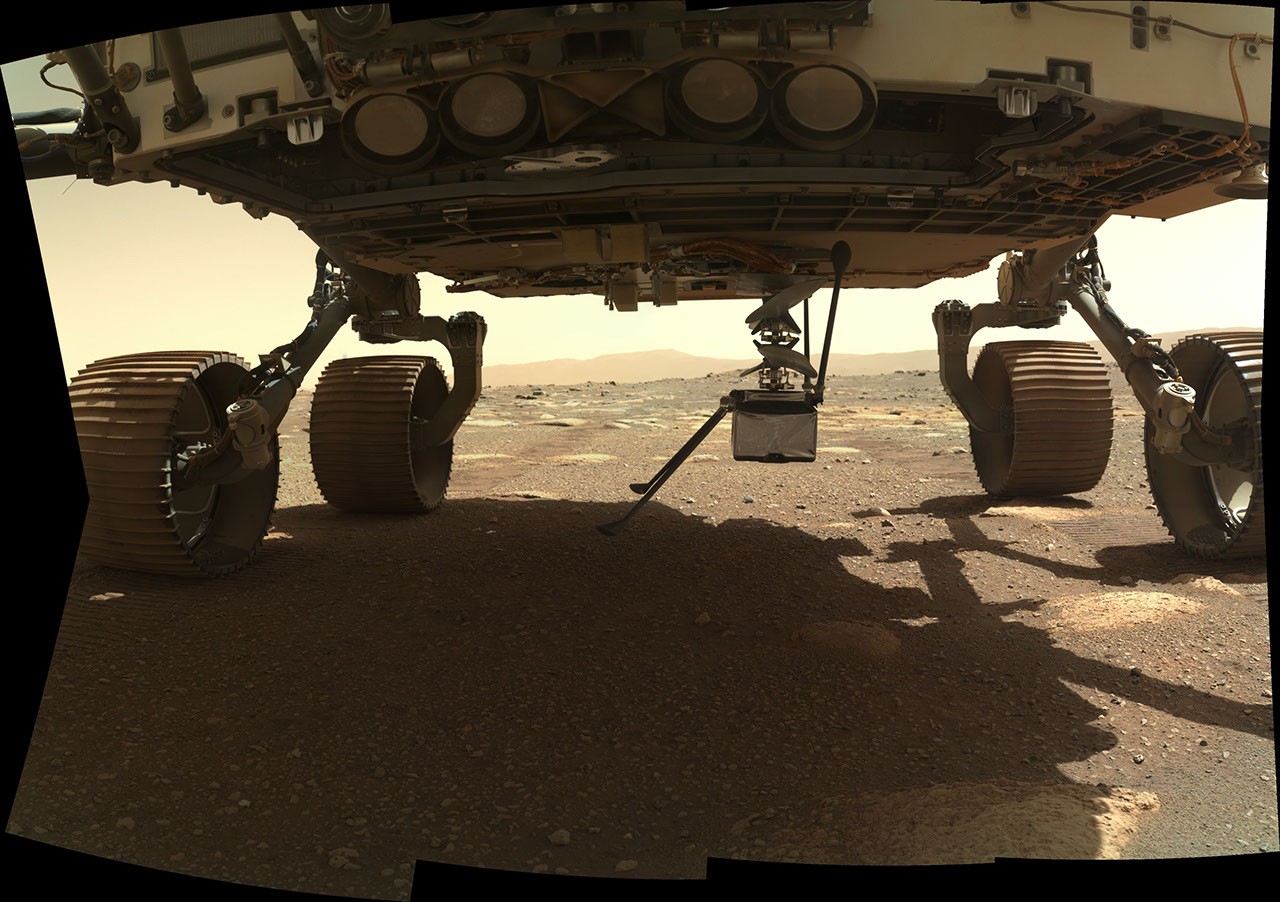
What the Mission page still owes
Imagine Mars Mission lists Transportation as an industry and then leaves the card empty. This is the flown fill. Thin air is a desk load. This rotor took it. A later NASA line names SkyFall as a next-generation helicopter concept for scouting human landing sites and mapping subsurface ice. That is an announcement. It is not this aircraft. This desk will not write a crew air taxi from a four-pound demo.
What this note will not say
Ingenuity flew. It scouted. It did not carry a crew. It did not open an airport. A Wright Brothers Field plaque is not a pad count. A swatch from Kitty Hawk is not a passenger ticket. A landing year for people is unpublished. This desk will not invent one.
Selected primary sources
NASA Science, “Ingenuity Mars Helicopter,” https://science.nasa.gov/mission/mars-2020-perseverance/ingenuity-mars-helicopter/. 72 flights; first 19 April 2021; last 18 January 2024; mission completed 25 January 2024; 128.8 minutes; 10.5 miles / 17.0 km; peak 78.7 ft / 24.0 m; mass ~4 lb / 1.8 kg; rotors ~4 ft / 1.2 m; atmosphere less than 1% Earth’s density. NASA, “NASA’s Ingenuity Mars Helicopter Succeeds in Historic First Flight,” 19 April 2021, https://www.nasa.gov/news-release/nasas-ingenuity-mars-helicopter-succeeds-in-historic-first-flight/. Wright Brothers Field; JZRO; Wright Flyer swatch; tech demo with no science instruments. NASA, “After Three Years on Mars, NASA’s Ingenuity Helicopter Mission Ends,” 25 January 2024, https://www.nasa.gov/news-release/after-three-years-on-mars-nasas-ingenuity-helicopter-mission-ends/. Designed for up to five flights in 30 days; flight 72 hop to 40 ft / 12 m; blade damage; upright and in contact, no longer capable of flight. PIA26243, NASA/JPL-Caltech. This desk labeled Ingenuity as flown rover-borne aircraft fact and crew aviation as unpublished. It did not invent a taxi, a pad count, or a landing year. Do not duplicate /research/moxie.
Ask this paper
Grok answers from this essay only. Sign in so the call stays on your session — one question at a time.
Sign in to askNext
Starship Flight 14