Starship · Flight 15 · Catch · 6 min read
Starship Flight 15
The arms close only on a go.
The arms close only on a go.
Flight 15 of Starship is preparing to launch as soon as Friday, November 13, pending regulatory approval. The 75-minute window opens at 4:45 p.m. CT. SpaceX prints the plan plainly: the first flight to return both Starship and Super Heavy to the launch site for catch. If it works, SpaceX calls it the first full recovery of an orbital launch system. Until it flies, it is a plan.
The profile
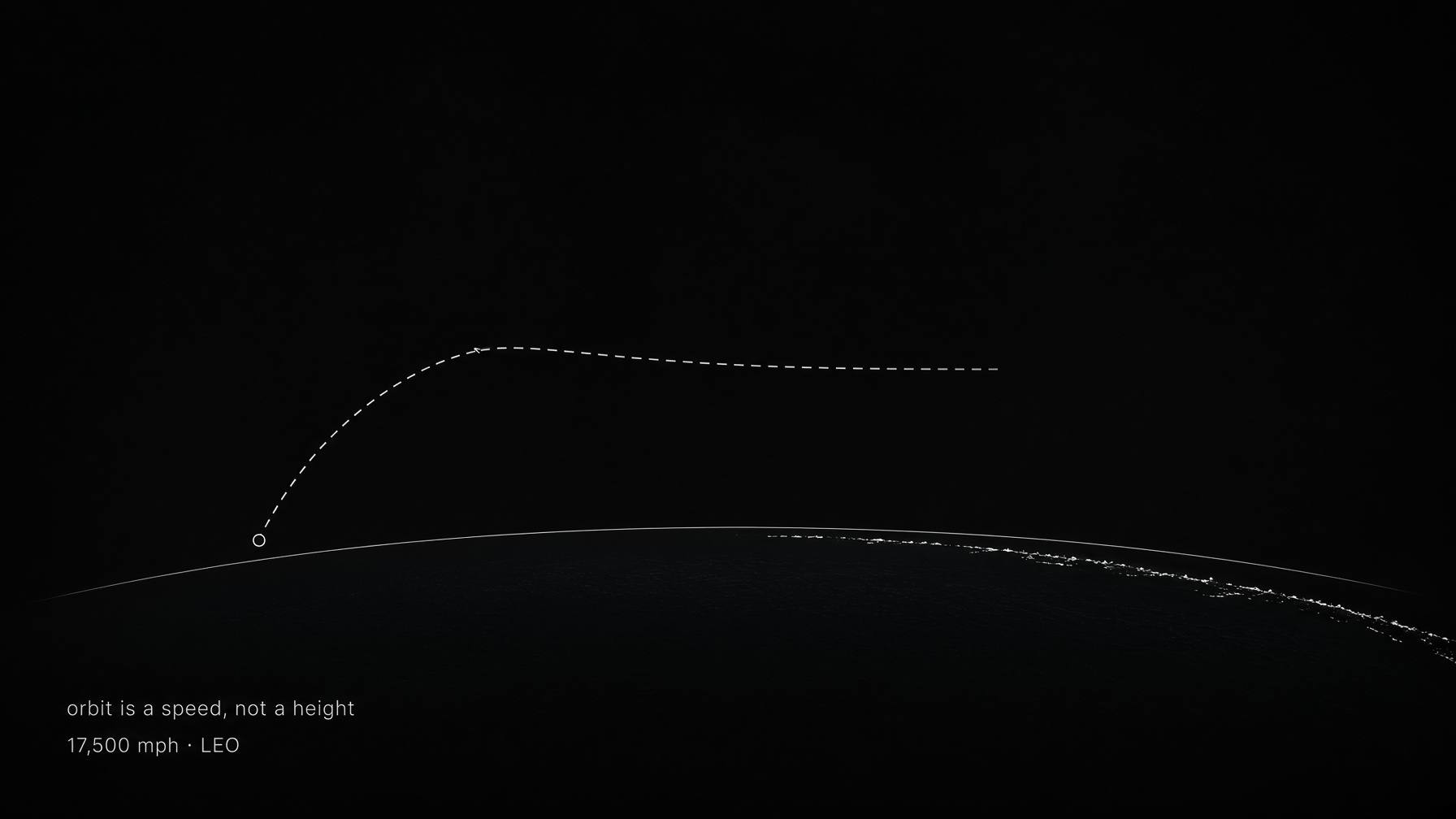
About 275 kilometers. About 14 orbits. More than 22 hours. Starship launches first to a passively safe suborbital trajectory, the same profile as the first orbital mission. Anything wrong early, and it comes down over a cleared area of the Indian Ocean. Flight controllers check the systems, then call go or no-go for orbit. On a go, one sea-level Raptor burns for insertion.
Twenty-six, and three cameras
Payload is 26 Starlink V3 satellites. SpaceX: each adds 1 terabit of capacity, and all 26 equal about 10 Starlink V2 Mini launches on Falcon 9. Three of them carry cameras to image Starship's heatshield and send the pictures down. That imagery is one of several inputs to the decision to come home.
Twenty-one hours of checks
After deploy, Starship coasts about 21 more hours until its orbit lines up with Starbase. SpaceX lists the checks: Raptor health, power and communications, flight computers and navigation sensors, tank and feedline structure, tank pressure, attitude control. If something fails, there are precleared Pacific splashdown zones, early and late around Hawaii and one mid-mission several hundred kilometers off Chile. Flight 14 used the same zones.
Over land
Every Starship return so far ended at sea, over unpopulated ocean, by design. To reach Starbase, the reentry path now crosses sparsely populated parts of northern Mexico and southern Texas. SpaceX points to the record: the Space Shuttle from 1981 to 2011, Dragon around Florida from 2020 to 2025, and every Soyuz and Shenzhou reentered over land. Return is allowed only if the vehicle meets SpaceX's internally developed, FAA-approved conditions for a return and catch.
The approach
One Raptor 3 burns to deorbit, aimed at a point over the Pacific thousands of kilometers uprange. Four flaps steer. A series of small turns keeps the path over sparse ground. From the west it weaves around the Rio Grande Valley cities, passes north of South Padre Island, goes out over the Gulf of America, and turns south. Cameron County may hear one or more sonic booms.
The catch
Over Starbase, the bellyflop toward the tower at Pad 2. Three sea-level Raptors light, the ship flips vertical and stows its flaps. It drops to two engines between the arms, then one, near a hover. The arms close on two catch fittings just below the forward flaps. On contact, the last Raptor shuts down. Abort paths stay open to the end: an intentional tumble to break up before land, or a late diversion into the Gulf if the ship or the tower has a problem.
The booster
Super Heavy's job is launch, ascent, separation, boostback, and return for catch. This is the first catch attempt for a V3 booster. SpaceX notes three V1 boosters were caught on earlier flights, and two of them reflew.
Tiles
The heatshield keeps the Flight 14 fixes: more retention on tiles in the highest-risk areas, and work on spots where plasma could get behind the tiles. A large part of the shield uses a curved tile design that SpaceX says has reduced heating in the gaps.
Not yet flown
No outcome is printed here. No date past November 13. No claim that a catch happened. When SpaceX publishes the flown log, this page gets rewritten the way Flight 14 was.
Selected primary sources
SpaceX Updates, Returning Starship to the Launch Site, 7 November 2026, https://www.spacex.com/updates#starship-catch. SpaceX, Starship Flight 15 mission page, https://www.spacex.com/launches/starship-flight-15.
Ask this paper
Grok answers from this essay only. Sign in so the call stays on your session — one question at a time.
Sign in to askNext
Fluctuating Habitability