Perseverance · Jezero · Geology · 8 min read
The Oldest Wall
The rover left the lake it was sent to and climbed the wall that made the lake.
The rover left the lake
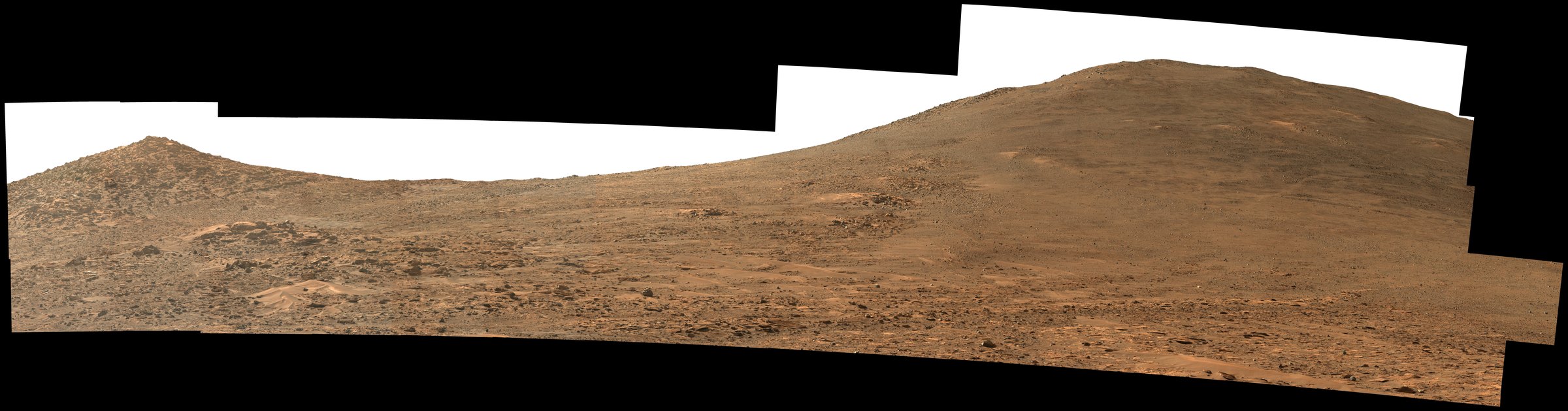
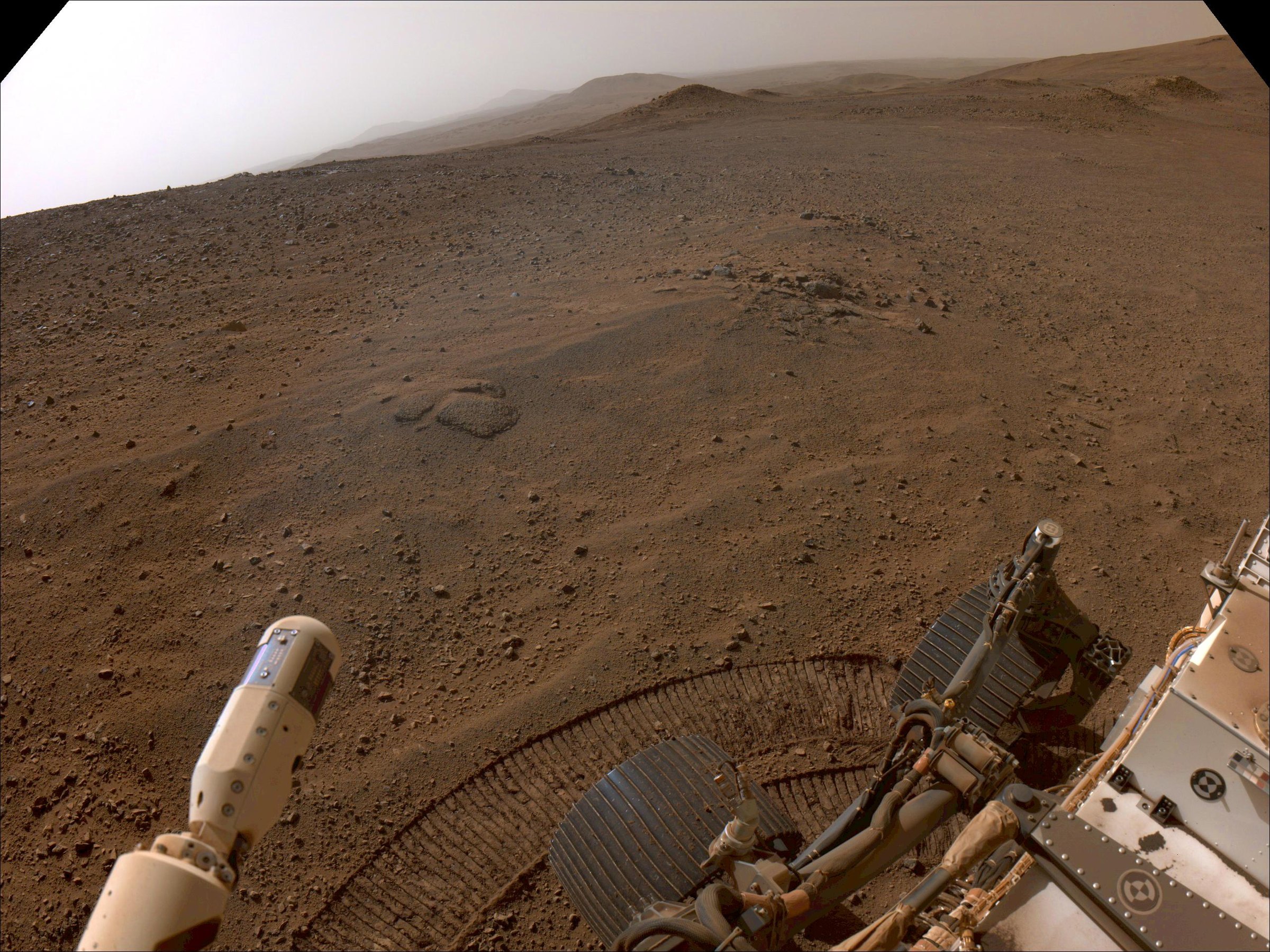
The rover left the lake it was sent to and climbed the wall that made the lake. From the crater floor to Lookout Hill took about 3 1/2 months. Perseverance gained 1,640 vertical feet (500 m) on grades of 20 percent. It reached the rim on Dec. 10, 2024, sol 1,354, looking west. NASA named that stance Lookout Hill. That is a rover on a rim. It is not a landing of people.
Five campaigns
The first four campaigns were Crater Floor, Fan Front, Upper Fan, Margin Unit. The fifth is Northern Rim. NASA’s published plan for the first year: as many as four geologic stops, several samples, about 4 miles (6.4 km) of drive. Farley, Dec. 2024: the climb is the transition from rocks that partly filled Jezero when the crater formed, about 3.9 billion years ago, to deep crust thrown up to make the rim. Those pieces are among the oldest rocks in the solar system. They are a crust sample, not a building lot.
Witch Hazel Hill, then Krokodillen
Witch Hazel Hill sits about 1,500 feet (450 m) down the far side. NASA describes more than 330 feet of layered outcrop. Driving down the hill is driving backward in time. Beyond the rim, Krokodillen sits on the contact between the oldest rim rocks and the plains. Those rocks formed before Jezero existed, in the Noachian. Farley (May 19, 2025): if a potential biosignature appears there, it is from an earlier epoch than Cheyava Falls — sampled July 2024 on the crater interior. NASA’s language is “could have been formed by life,” not a confirmed detection. This desk will keep that language.
- Witch Hazel Hill — ~1,500 ft (450 m) down the far side; >330 ft of layered outcrop
- Krokodillen — contact of oldest rim rocks and the plains; Noachian, before Jezero
- Cheyava Falls — July 2024, crater interior; “could have been formed by life,” not confirmed
- Northern Rim year-one plan — as many as four stops, several samples, ~4 miles (6.4 km)
Silver Mountain
Silver Mountain, the first rim core, came from Shallow Bay on Jan. 28, 2025. NASA: most likely 3.9 billion years old or older, possibly broken and recrystallized in an ancient impact. That is the printed age bound. This desk will not write a tighter number.
Broom Point
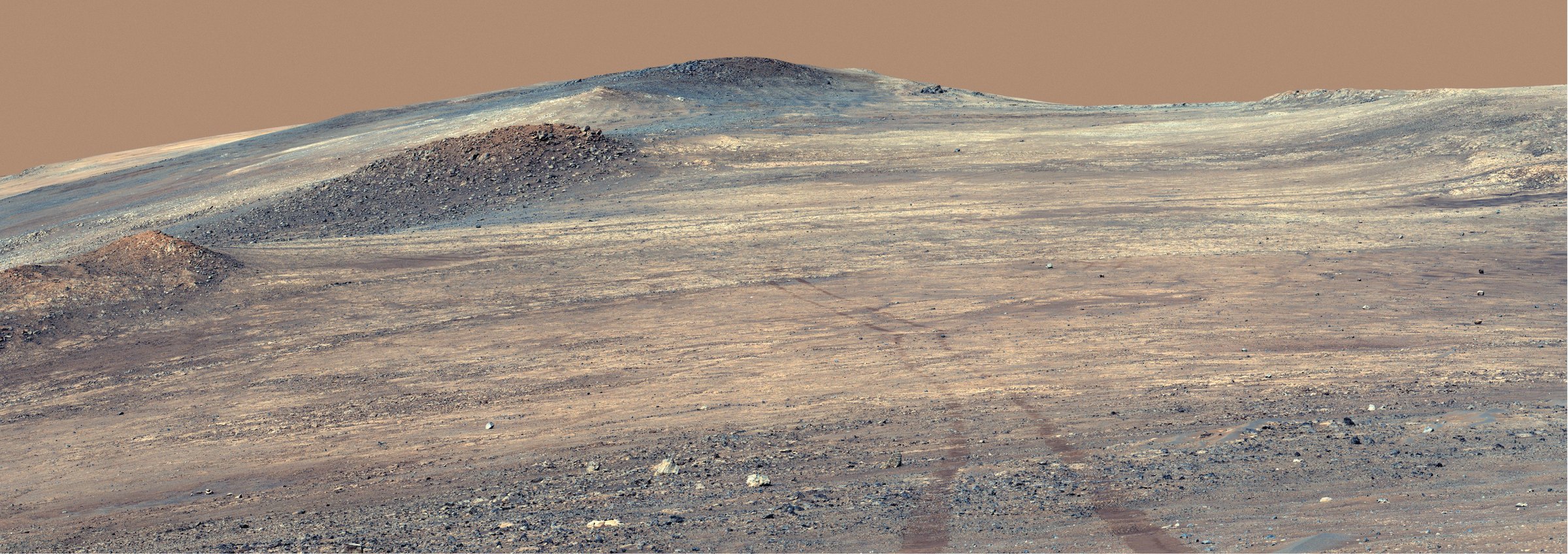
Broom Point member: a 245-foot-thick (75 m) stack on the outer lip of a rim NASA gives as about 490 feet (150 m) tall. Mastcam-Z, May 15, 2025, sol 1,505. Six rock types. Breccias of angular fragments, alternating with pulverized dust. Some clasts show gas-bubble cavities — they were molten. Layers tilt past 80 degrees. The later Isidis and Jezero impacts did that. Bell Island (April 22, 2025, sol 1,483) and Main River (March 10, 2025, sol 1,441) are the two cores NASA named for dating those impacts on Earth. Dating is not done until the tubes come home. Do not write an age more precise than likely more than 3.9 billion years.
A rim is not a city
Farley again: investigating these rocks could help us understand what Mars — and our own planet — may have looked like in the beginning. That is a crust sentence. Return of the tubes is a future mission. It is not a landing of people. This desk will not print a Starship year, a crew size, or a settlement on the fan. A rim is not a city.
Selected primary sources
NASA, “NASA’s Perseverance Rover Reaches Top of Jezero Crater Rim,” Dec. 12, 2024, https://www.nasa.gov/missions/mars-2020-perseverance/perseverance-rover/nasas-perseverance-rover-reaches-top-of-jezero-crater-rim/. NASA/JPL, “NASA’s Perseverance Mars Rover to Take Bite Out of ‘Krokodillen,’” May 19, 2025, https://www.jpl.nasa.gov/news/nasas-perseverance-mars-rover-to-take-bite-out-of-krokodillen/. NASA/JPL, “NASA’s Perseverance Mars Rover Studies Trove of Rocks on Crater Rim,” April 10, 2025, https://www.jpl.nasa.gov/news/nasas-perseverance-mars-rover-studies-trove-of-rocks-on-crater-rim/. PIA26373, Perseverance Rover’s View Up Crater, credit NASA/JPL-Caltech/ASU/MSSS. PIA26511, Perseverance’s View From ‘Lookout Hill,’ credit NASA/JPL-Caltech. PIA26755, Broom Point, credit NASA/JPL-Caltech/ASU/MSSS. NASA is the source for Lookout Hill on Dec. 10, 2024, sol 1,354; 1,640 vertical feet (500 m); 20 percent grades; Northern Rim’s first-year plan; Witch Hazel Hill at about 1,500 feet (450 m) with more than 330 feet of layered outcrop; Krokodillen on the Noachian contact; Silver Mountain from Shallow Bay on Jan. 28, 2025, most likely 3.9 billion years old or older; Broom Point 245 feet (75 m) on a rim about 490 feet (150 m) tall, sol 1,505; Bell Island sol 1,483 and Main River sol 1,441; and Farley’s “could have been formed by life” language for Cheyava Falls. This desk did not invent a landing of people, a tighter age, a Starship year, or a city on the rim.
Ask this paper
Grok answers from this essay only. Sign in so the call stays on your session — one question at a time.
Sign in to askNext
Starship Flight 14