Perseverance · ISRU · Oxygen · 7 min read
The First Breath
Sixteen runs. 122 grams. 98% pure. Mars made oxygen for a rocket that has not left.
Sixteen runs. 122 grams. 98% pure.
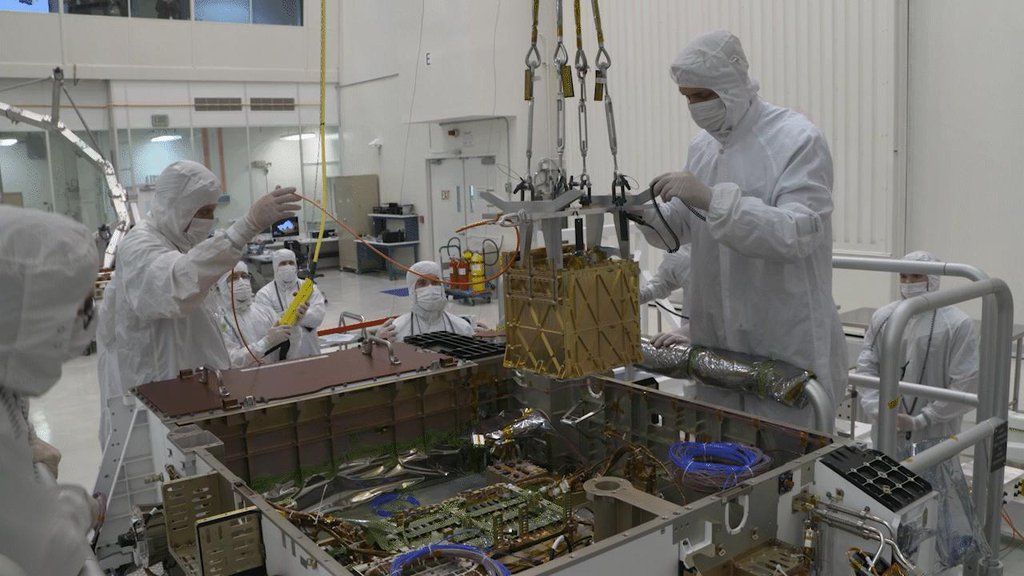
Sixteen runs. 122 grams. 98% pure. Mars made oxygen for a rocket that has not left. Perseverance is on the floor of Jezero on 18 February 2021. On sol 60, 20 April, a toaster-size box in the front-right of the chassis warms for two hours and then drinks the air. The air is 96 percent carbon dioxide. The box is MOXIE: Mars Oxygen In-Situ Resource Utilization Experiment. NASA’s first oxygen on another world.
The chemistry is one atom at a time
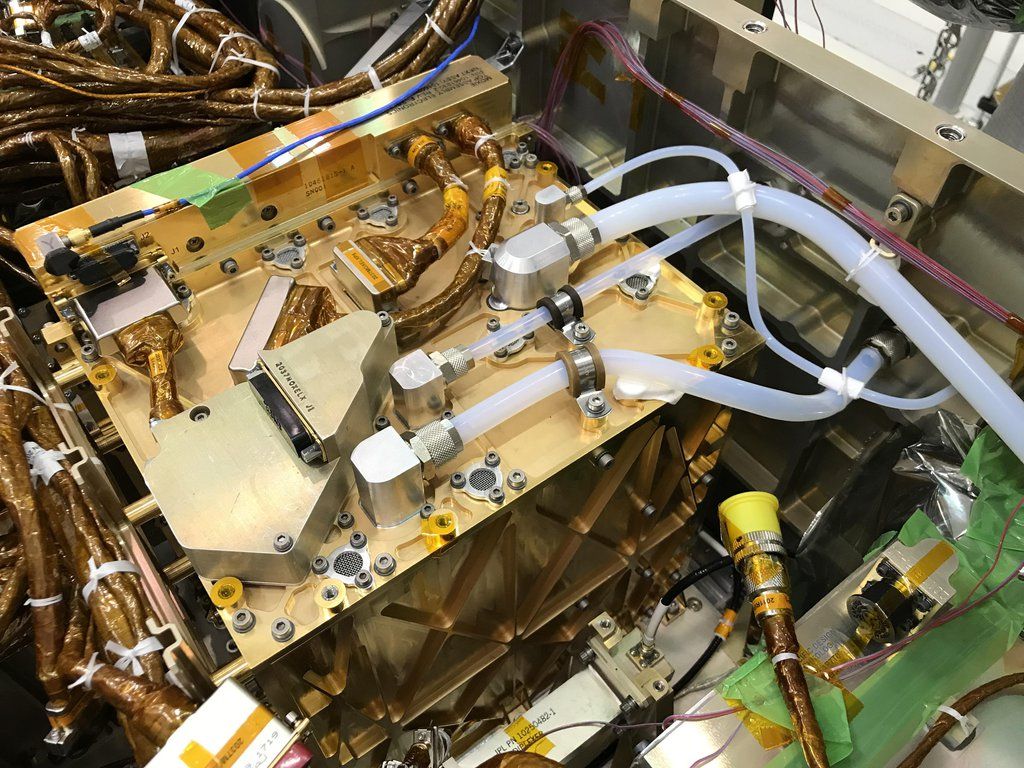
The chemistry is one atom at a time. Carbon dioxide is one carbon and two oxygen. An electrochemical stack strips one oxygen from each molecule. Carbon monoxide goes back out. The box has to sit at about 1,470 degrees Fahrenheit — 800 Celsius. 3D-printed nickel alloy moves the gas. Aerogel holds the heat. A thin gold coat keeps infrared from cooking the rover. NASA printed the mass as 37.7 pounds, 17.1 kilograms, and the draw as 300 watts. That is a demonstration load. It is not a plant.
First run
First run: after an hour, about 5.4 grams. NASA: enough to keep an astronaut healthy for about ten minutes of normal activity. The design target is up to 10 grams an hour. The first hour made 6 grams an hour, then stepped down twice so the team could see the instrument. SuperCam’s microphone later recorded the compressor on sol 96. That is a flown sound. It is not a city. That is not a plant. That is a demonstration that the air can be split.
NASA’s own scale
NASA’s own scale is why the box exists. Getting four astronauts off the surface would require approximately 15,000 pounds — 7 metric tons — of rocket fuel and 55,000 pounds — 25 metric tons — of oxygen. Michael Hecht, the principal investigator: “The astronauts who spend a year on the surface will maybe use one metric ton between them.” The oxidizer is the load. The breath is the small one. Hauling 25 tons of oxygen from Earth is the thing the box is meant to kill. The first-oxygen release prints a one-ton converter as the descendant that could make those 25 tons. That sentence is a plan. It is not this instrument. This desk will not write the plant.
Sixteen runs later the numbers are closed
Sixteen runs later the numbers are closed. From landing in 2021 through 7 August 2023, MOXIE made 122 grams of oxygen — NASA: about what a small dog breathes in 10 hours. At its most efficient: 12 grams an hour, twice the original goal, 98 percent purity or better. The last run made 9.8 grams. It ran through a full Mars year, different times of day, different seasons. All technical requirements complete.
Feasible. Could help.
Pam Melroy, 6 September 2023: it is feasible to extract oxygen from Mars’ atmosphere — oxygen that could help supply breathable air or rocket propellant to future astronauts. Feasible. Could help. Not a crew. Not a year. The next step, NASA and Hecht both write, is not MOXIE 2.0. It is a full-scale system that makes oxygen and then liquefies and stores it. This desk already keeps the watts that would take — 3.6 megawatts to fill two ships — on another paper. This one stays on the box that flew.
What this note will not say
MOXIE made oxygen. It did not make methane. The fuel for the return is still ice and dust and a reactor that has not landed. Those are other papers. This is a flown fact. The rover did this. A demo is not a plant. A breath is not a city. A landing year is unpublished. This desk will not invent one.
Selected primary sources
NASA, “NASA’s Perseverance Mars Rover Extracts First Oxygen from Red Planet,” 21 April 2021, https://www.nasa.gov/news-release/nasas-perseverance-mars-rover-extracts-first-oxygen-from-red-planet/. First run 20 April 2021, sol 60; 96% CO2; ~5.4 g first hour; 7 t fuel + 25 t oxygen for four astronauts; Hecht one-metric-ton breath; one-ton converter as a printed descendant. NASA, “NASA’s Oxygen-Generating Experiment MOXIE Completes Mars Mission,” 6 September 2023, https://www.nasa.gov/missions/mars-2020-perseverance/perseverance-rover/nasas-oxygen-generating-experiment-moxie-completes-mars-mission/. Sixteen runs; 122 g; 12 g/hr at 98% purity or better; last run 7 August 2023, 9.8 g. NASA Mars 2020 instrument page, https://mars.nasa.gov/mars2020/spacecraft/instruments/moxie/. 17.1 kg, 300 W. PIA24176, https://science.nasa.gov/photojournal/engineers-lower-moxie-into-perseverance/. PIA24203, https://www.jpl.nasa.gov/images/pia24203-moxie-all-tucked-in/. Credit NASA/JPL-Caltech. This desk labeled MOXIE as flown rover fact and a scaled plant as unpublished. It did not invent methane, a landing, a crew, or a city. Do not duplicate /research/powering-mars, /research/last-meters-of-dust, /research/ice-inventory.
Ask this paper
Grok answers from this essay only. Sign in so the call stays on your session — one question at a time.
Sign in to askNext
Starship Flight 14